
Short pasta products place different demands on the packaging process. High output rates, the products’ susceptibility to breakage, new packaging materials, and a wide variety of packaging formats require solutions that take the entire packaging process into account.
ROVEMA combines a broad portfolio of machines with decades of experience in pasta packaging. This results in customized packaging solutions and complete systems tailored to the product, packaging concept, and performance requirements - from dosing to bag packaging to final packaging.
Your benefits with ROVEMA at a glance
- Tailored solutions for a variety of requirements: machine and production line designs tailored to the product, packaging type, and performance requirements.
- End-to-End line integration: Coordinated processes from dosing to final packaging.
- Gentle product handling: Precisely tailored dosing, conveying, and packaging technology minimizes product breakage and ensures the quality of your products.
- Highest packaging quality: Reliable processes for consistently high packaging quality.
- Flexibility for future requirements: Adaptable to new packaging materials, formats, and packaging concepts.
Project reliability: Proven machine designs and industry experience minimize project risks.
Your pasta. Your packaging. Your perfect ROVEMA solution.
Whether it’s filini, farfalle, or paccheri: The characteristics of your pasta determine the requirements for dosing, product handling, and the packaging process. Cost-effectiveness, packaging quality, and future-proofing are crucial factors in the design of the entire system. Our packaging solutions are designed precisely to meet these requirements.

Reliable and stable production
High system availability, consistent performance, and reproducible processes lay the foundation for cost-effective packaging of short cut pasta.

Adaptability to new packaging requirements
New packaging materials, changed formats, or new box designs require adjustments. Modifications and upgrades are part of our solution.

End-to-End line integration
From dosing and primary packaging to final packaging, processes and interfaces are coordinated with one another.

Gentle processing of the product
Gentle dosing and conveying technology minimize breakage and ensure the quality of your products.

High-quality packaging
Precisely shaped and tightly sealed bags, precisely formed cartons with maximum packing density.

Reliable partnership and service
Cooperation and commitment throughout the entire life cycle are our top priorities.
Flexibility in the system
Intuitive system operation and short changeover times
Flexibility is essential when different types of pasta are processed on a packaging line and the packaging material, bag style, format, or carton shape change. Our packaging lines enable simple and quick changeovers, guided by an intuitive and integrated control and operating concept.
This allows for the processing of a variety of products, packaging formats, and packaging materials - from laminated films and paper to mono material substrates. Consistently high packaging quality, product protection, and line throughput are maintained throughout the process.
ROVEMA Service World: support throughout the entire lifecycle
From spare parts and remote service to maintenance and training, all the way to modernization, we support packaging line operators throughout the entire life cycle of their equipment.
Depending on your needs, we provide prompt assistance in the event of service requests, regular maintenance, training, as well as technical upgrades and modernizations.
This is how you ensure the long-term availability, performance, and future-proofing of your packaging solution.


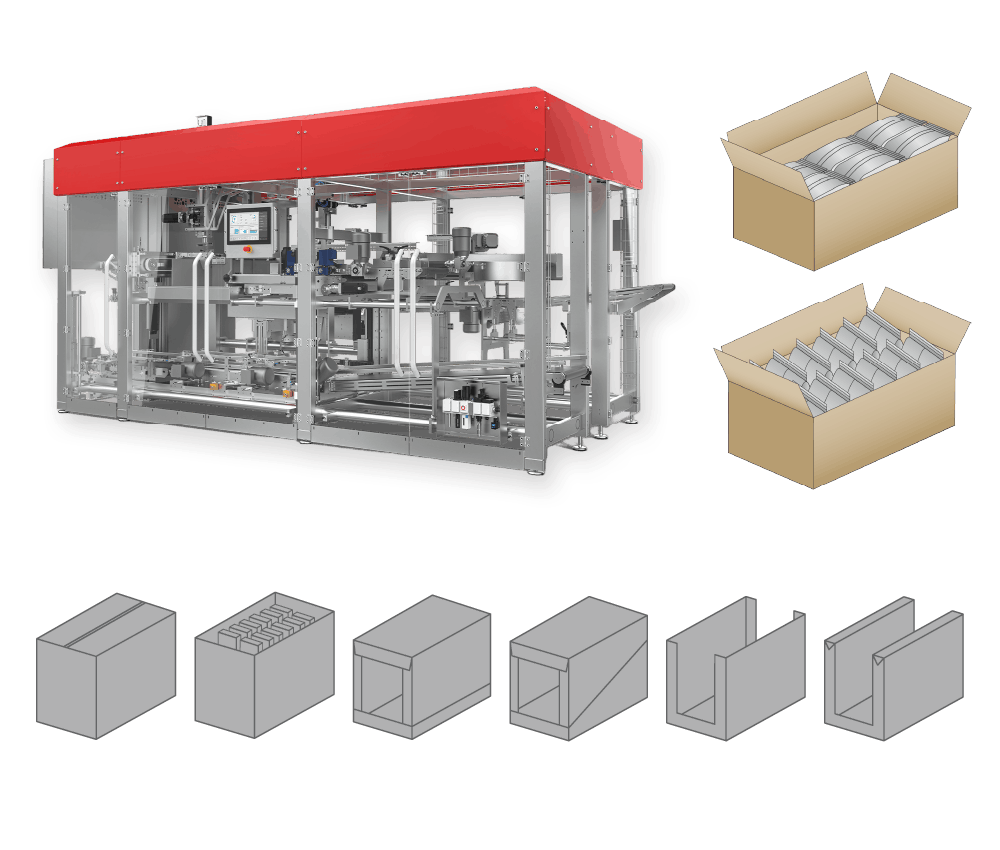
Final packaging machine ELD Flex
Feeding system for upright and horizontal pack configurations
- Vertical and horizontal product orientation on a single machine
- Processing of American cases, trays, and other container types
- Quick format change in under 5 minutes for high availability when switching between products
- Flexible integration of the case erector and sealer, tailored to the layout design
Output: up to 20 cartons per minute
Future-Proofing the System
Is my packaging solution adaptable to new materials and future requirements?
In the pasta packaging industry, future-proofing means that a packaging line is not only efficient today but can also adapt to new materials, new market requirements, and changes in product or packaging concepts. Especially when it comes to short pasta and other tubular products, material flexibility thus becomes a key investment factor.
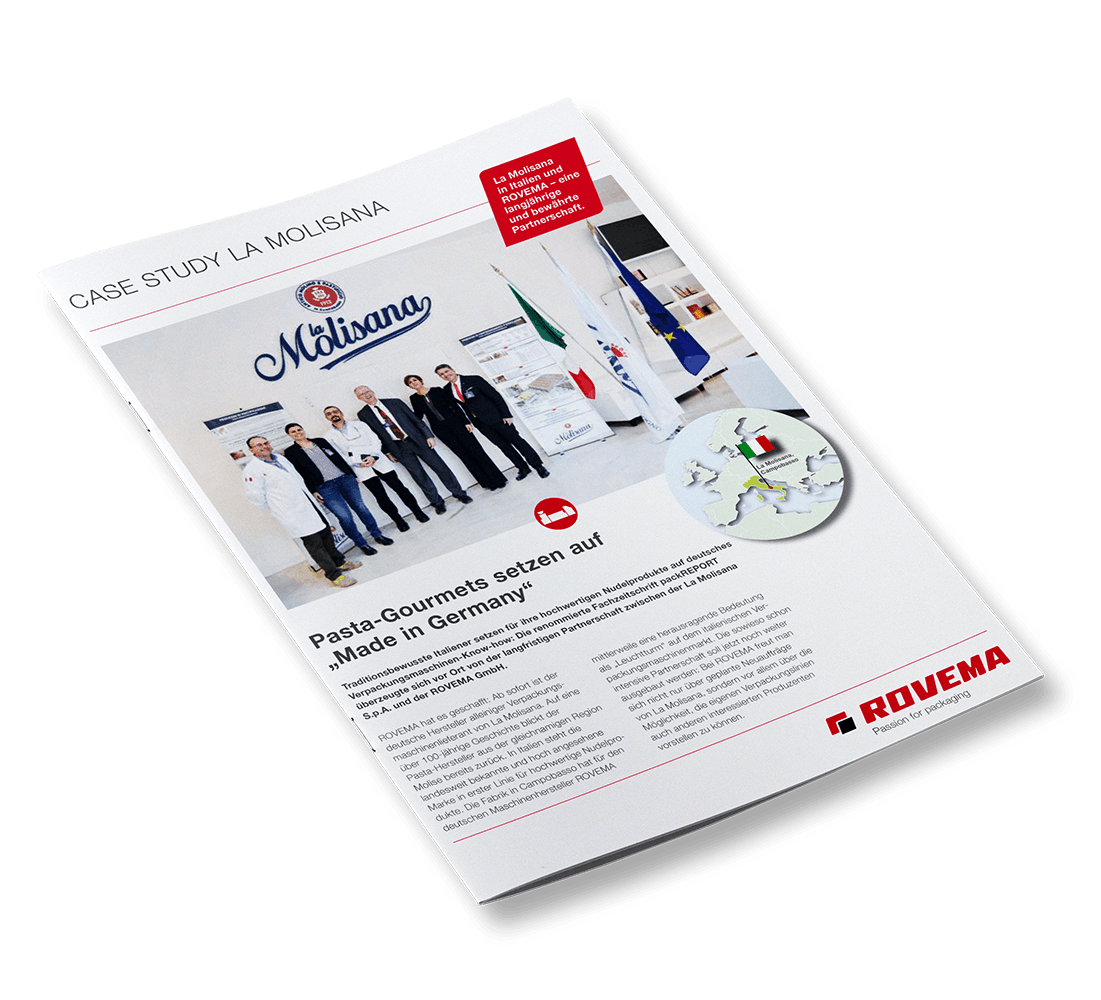
Case Study: La Molisana
La Molisana demonstrates what sustainability looks like in practice. At the Campobasso plant, nine packaging lines equipped with ROVEMA technology are in operation; the ROVEMA High-Speed SBS achieves speeds of up to 160 bags per minute there and allows for the use of everything from traditional films to paper-based alternatives.
The case study demonstrates how performance, process reliability, material flexibility, and standardized workflows can be combined. Packaging thus becomes not just a production step, but part of a long-term brand and growth strategy.
Practical Application Instead of Theory
Have the new packaging materials and processes already been tested under real-world conditions?
New packaging materials only truly prove their worth when they perform under real-world conditions. That is precisely why the ROVEMA Technical Centre plays a central role: Here, processes, materials, and machine settings are tested directly on the machine - quickly, reliably, and without disrupting ongoing production. Risks such as downtime or scrap can be minimized before the actual changeover takes place.
This helps reduce risks before the actual transition and ensures that processes run smoothly. Validation under production conditions is a crucial step, especially when dealing with paper-based solutions, high fiber content, or reduced material thickness.
Application Tests
The application tests demonstrate how paper-based packaging, product protection, and stable processes for pasta and short cut pasta products can be combined under real-world production conditions.
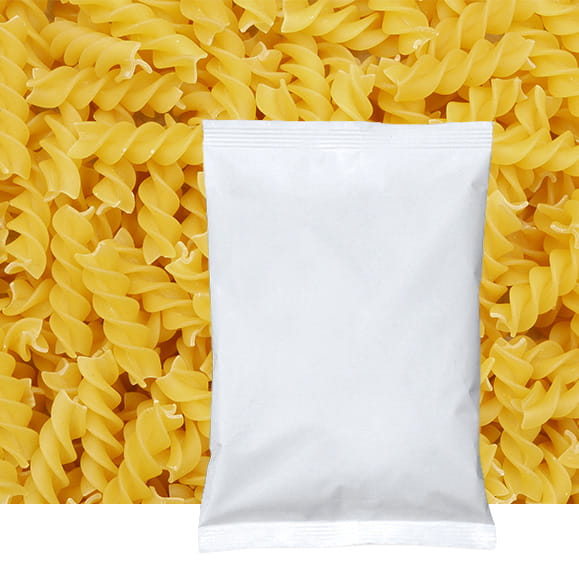
Short pasta quickly and efficiently packaged in flat paper bags
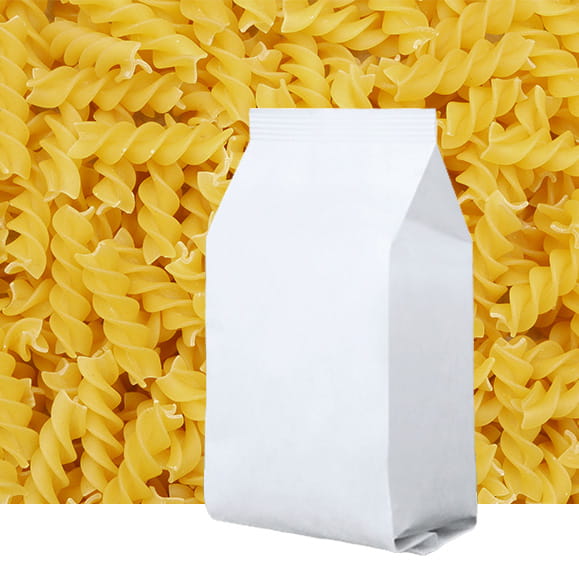
Attractive paper stand-up pouches made with minimal use of resources for short cut pasta
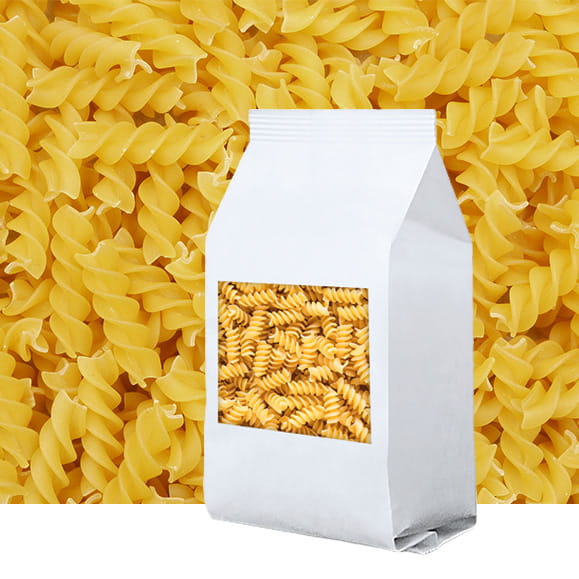
Stand-up pouches with an optional window
Further Development Within the System
How can I switch to sustainable materials without compromising production and process reliability?
Sustainability does not necessarily require the replacement of entire packaging lines. The economically and ecologically sound approach is often the targeted modernization of existing line technology: through retrofits, updated control systems, and adaptations to specific customer and material requirements as part of ROVEMA Services.
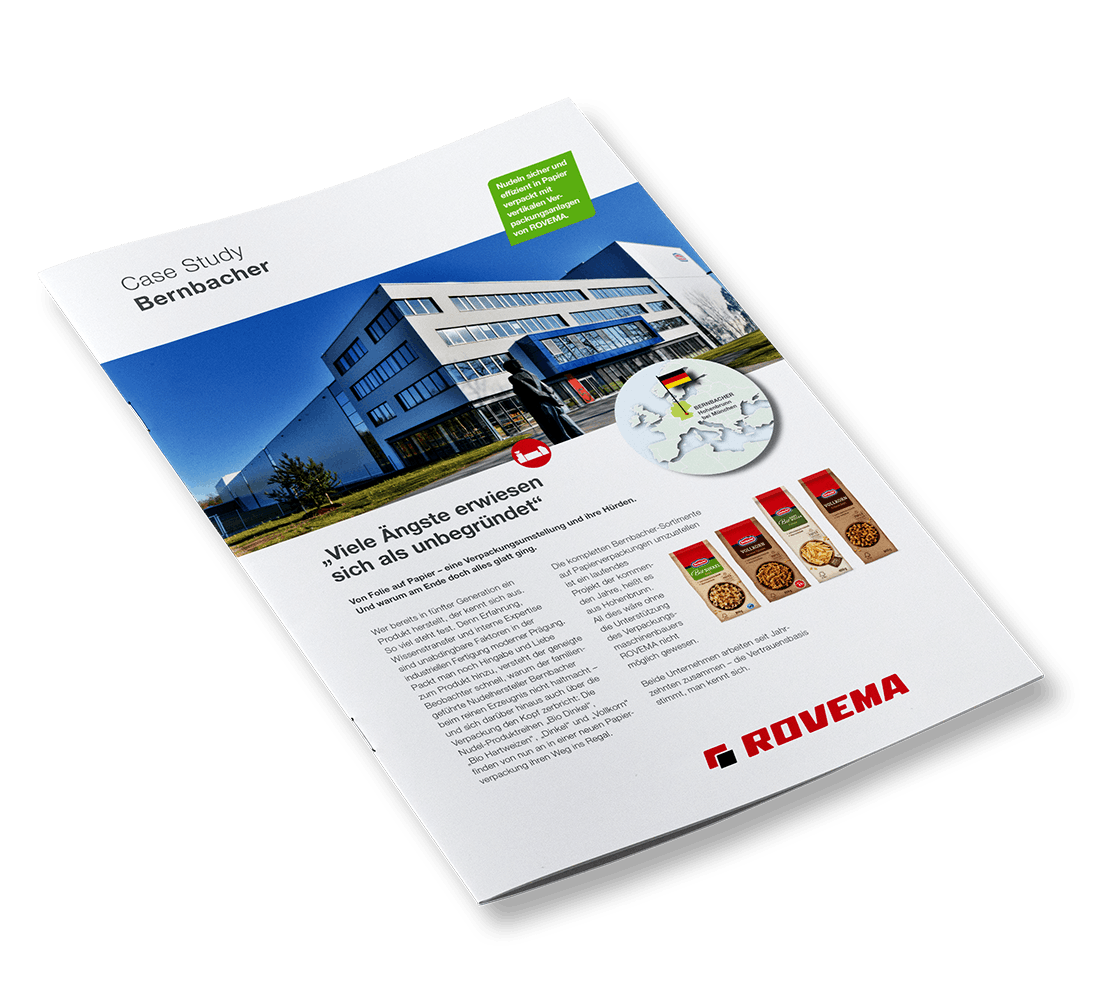
Case Study: Bernbacher
Bernbacher demonstrates how a gradual transition from plastic to paper can be successfully achieved. Working together with the ROVEMA Service Team, existing packaging machines were systematically modified; today, the SBS TwinTube processes both plastic and paper.
This approach to further development protects existing investments and creates opportunities for more sustainable solutions. It demonstrates that future-readiness is achieved not only through new investments, but also through targeted technical upgrades to existing infrastructure.
Solution as a complete system
Do I have a partner who combines systems thinking, service, and technology?
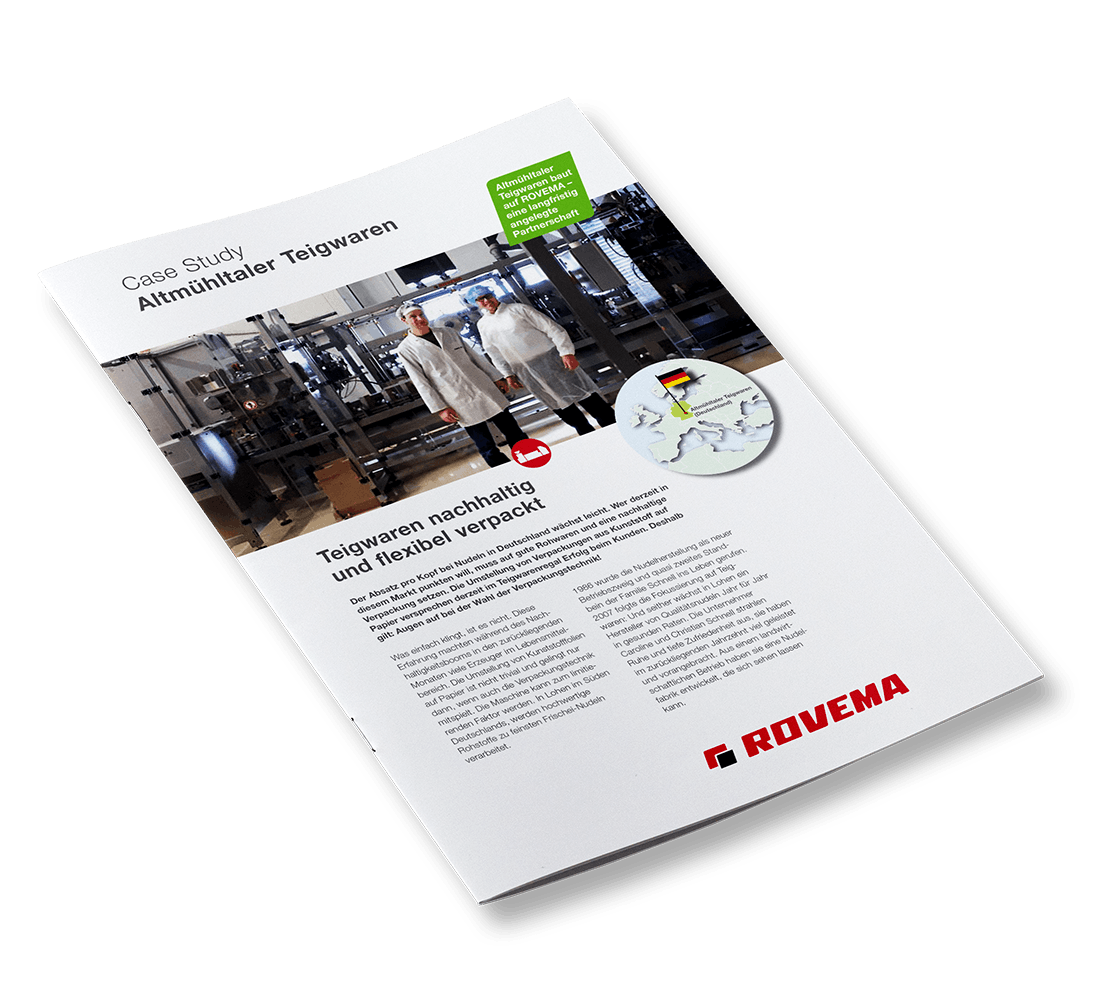
The three case studies show that sustainable solutions emerge when operators and suppliers work together. What matters most is not the individual components, but rather an integrated system that effectively combines the product and packaging materials.